
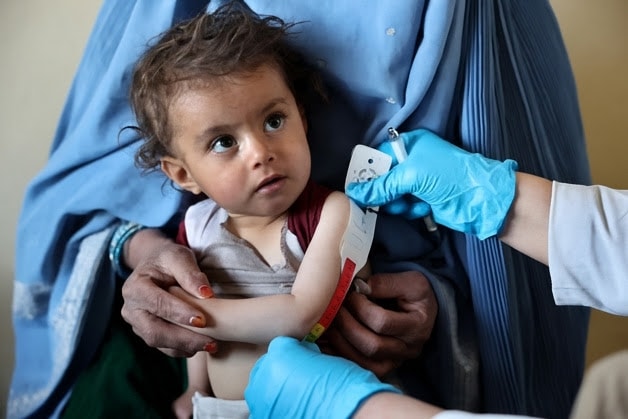
Médecins Sans Frontières (MSF), also known as Doctors Without Borders, has reported a significant increase in malnutrition among children in Afghanistan, warning that widespread poverty and food shortages have left many families unable to provide their children with sufficient and nutritious food. According to the organisation, the number of children hospitalised due to malnutrition has increased by 28 per cent.
In a report published on 27 Aqrab, MSF stated that 8,487 cases of children admitted with acute malnutrition were recorded between January and August 2026 in the provinces of Herat, Helmand and Kandahar. This represents a 28.24 per cent increase compared with the same period in 2025.
During the same period, the number of children under six months of age admitted to healthcare facilities due to malnutrition also increased by 31.5 per cent. According to MSF, malnourished children account for between 26.5 and 35.7 per cent of all paediatric admissions in healthcare facilities across these three provinces.
Anna Banda, MSF’s Medical Activity Manager in Afghanistan, said that some mothers are forced to take their malnourished children to hospital two or three times. However, after returning home, the children often suffer from malnutrition again because their families cannot afford to buy sufficient and nutritious food.
She added that poverty, long distances to healthcare facilities, health problems affecting caregivers, restrictions on movement, and shortages of certain nutritional supplements in some healthcare facilities have created serious challenges in providing treatment and care for affected children.
MSF has warned that cuts in international humanitarian funding have placed additional pressure on Afghanistan’s healthcare system. According to figures from the World Health Organization (WHO), only 19 per cent of the funding required for healthcare assistance had been secured by June 2026.
Due to the shortage of financial resources, 295 healthcare facilities across Afghanistan were forced to close or scale back their operations between January and June this year. As a result, approximately 2.17 million people have lost access to healthcare services.
Furthermore, an estimated four million children and 1.27 million pregnant and breastfeeding women in Afghanistan are expected to require malnutrition treatment in 2027.
Poverty and malnutrition continue to worsen as nearly 15 million people in Afghanistan face severe food insecurity, while rising food prices have further eroded families’ purchasing power.
The UN Secretary-General had previously warned that severe hunger not only threatens the lives of Afghan children but also deprives them of educational opportunities, placing their academic futures at risk.
Writer:Roya Stanikzai