
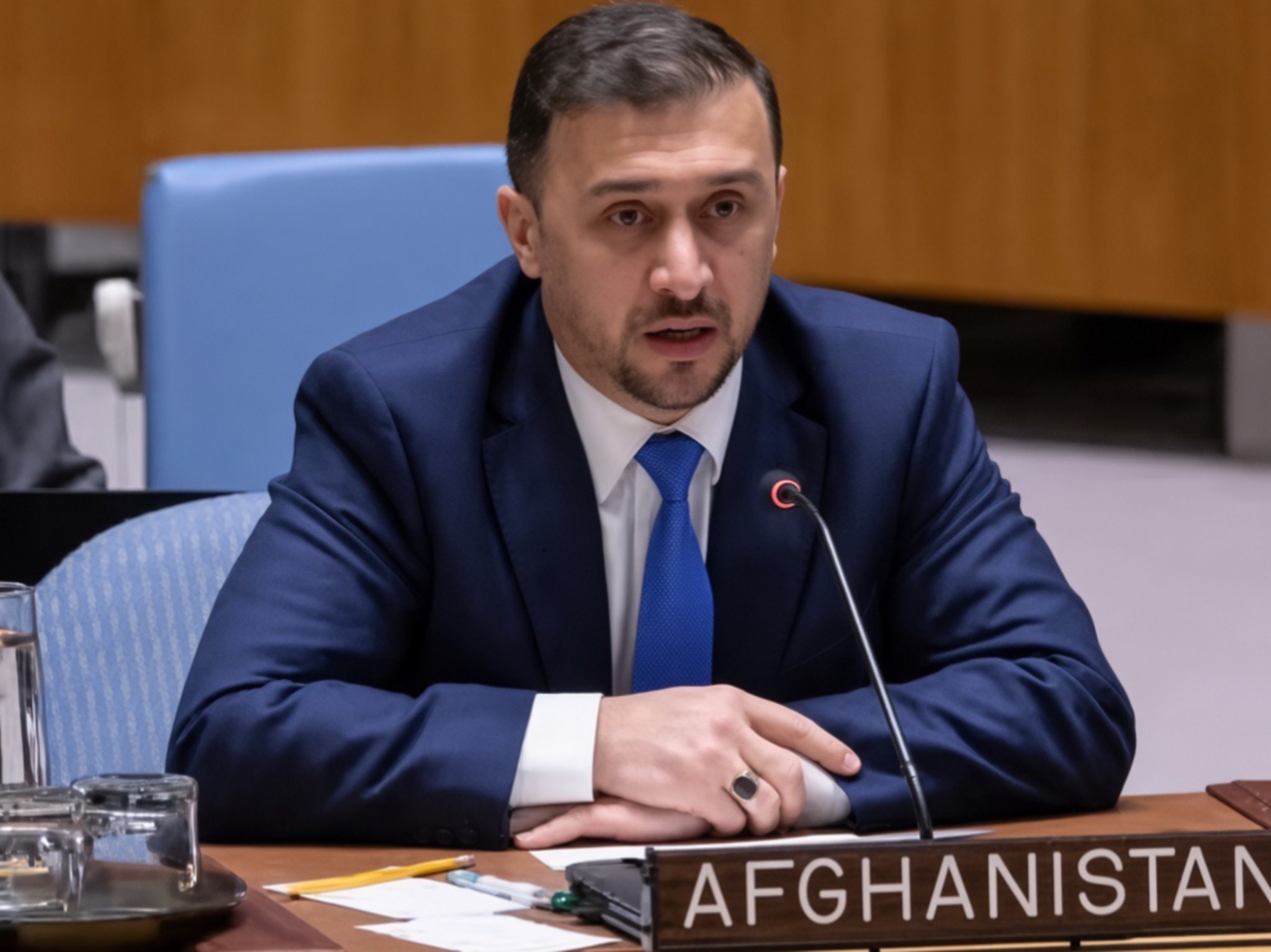
Nasir Ahmad Faiq, Chargé d’Affaires of Afghanistan’s Permanent Mission to the United Nations, has expressed concern over the worsening human rights crisis and humanitarian situation in Afghanistan, calling for the immediate lifting of Taliban restrictions on women, girls, and minorities.
Faiq made these remarks during a meeting of the Third committee of the United Nations general Assembly. He said the Taliban’s repressive measures and restrictions imposed on various segments of society were inconsistent with Afghanistan’s religious principles and cultural traditions and must be revoked.
He also welcomed the report by Richard Bennett, the UN Special Rapporteur on the situation of human rights in Afghanistan, describing the country’s current circumstances as a loss of opportunities for an entire generation.
Highlighting the exclusion of millions of girls from education, Afghanistan’s representative said the continued closure of secondary schools and universities to women and girls not only jeopardizes their future and livelihoods but also threatens the future of the entire country.
Faiq also expressed concern over the expansion of ideological and jihadist madrasas at the expense of basic education for boys. He warned that the rise in child labour and the growing opportunities for the recruitment of children into armed groups were further alarming consequences of the current situation. He stressed the importance of supporting online learning initiatives and community-based education programmes.
He further identified the suppression of civil society activists and journalists, along with arbitrary arrests, as major concerns regarding the Taliban’s conduct.
Referring to the return of more than five million Afghan migrants from neighbouring countries since October 2021, Faiq said many had returned under difficult circumstances and without access to the necessary support and assistance.
He urged host countries to uphold the principle of non-refoulement and refrain from forcibly returning individuals who may face danger upon their return to Afghanistan.
Faiq further emphasized that the international community’s engagement with the Taliban must be conditional on compliance with clearly defined human rights standards. He cautioned that such engagement must not lead to the normalization of policies described as gender apartheid.
He also called for the uninterrupted delivery of humanitarian assistance in education, healthcare, and livelihoods, emphasizing the need to establish independent international mechanisms to ensure justice and accountability. In this regard, Faiq highlighted the importance of maintaining the effectiveness of international mechanisms and the International Criminal Court.
He concluded that addressing the root causes of Afghanistan’s crisis would only be possible through a peace process that places the Afghan people at its centre and leads to the establishment of an inclusive, accountable government based on the will of the people.
Writer:Roya Stanikzai