
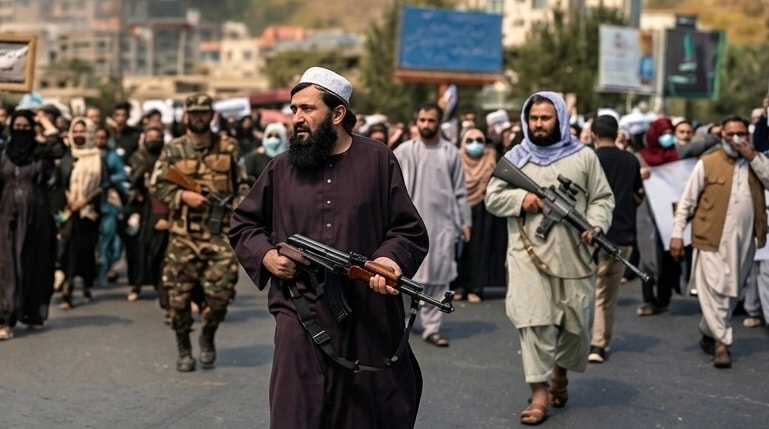
As the fifth anniversary of the Taliban’s return to power approaches, Human Rights Watch has stated that Afghanistan is facing one of the world’s most severe human rights and humanitarian crises. The organization says widespread restrictions on women and girls, as well as the repression of critics, have further deteriorated the country’s situation.
In a report released on Monday, 12 Asad, marking the fifth anniversary of the Taliban’s renewed control over Afghanistan, Human Rights Watch wrote that since returning to power the group has violated the fundamental rights of citizens particularly women and girls through the imposition of extensive restrictions.
The report notes that women and girls continue to be barred from secondary and university education and face widespread limitations on employment, freedom of movement, freedom of expression, and participation in public life. The organization identifies these restrictions as among the most significant human rights challenges in Afghanistan.
Human Rights Watch also stated that journalists, civil society activists, and individuals whom the Taliban regard as critics continue to face threats, arbitrary detention, and torture. According to the organization, hundreds of members of the former government’s security forces have been victims of revenge killings and extrajudicial executions in recent years.
In another section of the report, Afghanistan’s humanitarian situation is described as “critical.” Human Rights Watch notes that following the sharp reduction in international aid, half of the country’s population now requires food assistance and healthcare services, while the health system faces a severe shortage of resources.
The organization added that more than 3.7 million children in Afghanistan are suffering from acute malnutrition. Mass deportations of Afghan migrants from Pakistan and Iran have further deepened the humanitarian crisis, as many returnees lack shelter, employment, and sources of income.
The report further states that armed clashes between the Taliban and Pakistan, together with attacks by the Islamic State’s Khorasan branch in recent years, have left hundreds of civilian casualties. Human Rights Watch regards this situation as one of the factors intensifying insecurity and the humanitarian crisis in Afghanistan.
Referring to the International Criminal Court’s arrest warrants for Taliban leaders and the establishment of a United Nations independent accountability mechanism for Afghanistan in 2025, Human Rights Watch assessed these steps as important measures toward ending impunity for perpetrators of human rights violations.
The organization concluded by stressing that merely condemning Taliban policies is not enough. Human Rights Watch called on governments to increase pressure on the Taliban to lift restrictions imposed on women and girls, support international accountability processes, fund humanitarian programs in Afghanistan, and end the forced deportation of Afghan refugees and migrants in order to improve the country’s situation.
Writer:Salima Aryaei