
Iran claims three Pilots captured in Qatar; Tehran appeals to red cross for clarification of their status.
The commander of the Missing Persons Search Committee of the General Staff of Iran’s Armed Forces has claimed that three Iranian pilots who went missing after a combat mission in Qatar are alive and, according to him, were captured by Qatari forces. He has called on the International Committee of the Red Cross (ICRC) to take action to clarify the status of the three pilots and follow up on their rights.
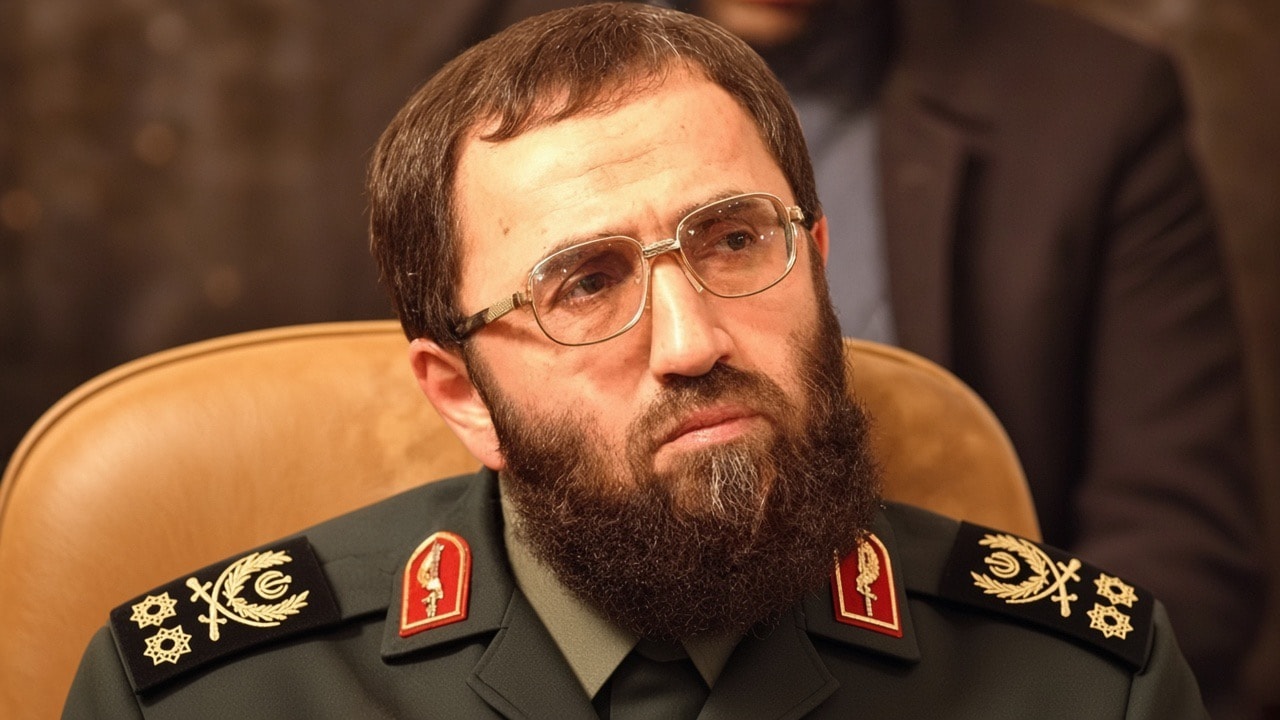
Brigadier General Mohammad Bagherzadeh, in a letter to Mirjana Spoljaric, president of the International Committee of the Red Cross, wrote that two Su-24 fighter jets flew toward a U.S. military base in Qatar on 11 Hoot 1404 (March 1, 2026) to carry out a combat mission. The letter has been published by Iranian media.
According to Bagherzadeh, the two fighter jets were targeted by air defenses while returning from the mission, forcing the pilots to eject. Of the four pilots involved, Majid Kazemi was killed. His remains were identified and transferred to Iran, where he was laid to rest following a funeral ceremony in Shiraz on Friday, August 1.
Bagherzadeh said the other three pilots involved in the incident Javad Salehi, Abdolmajid Dashtian, and Omran Behrouzian survived after ejecting from their aircraft and were subsequently captured by Qatari forces. He called on the Red Cross to investigate their situation and seek access to them.
The claim comes after Iranian officials and media had previously spoken of efforts to determine the fate of the three pilots, without releasing clear official information about their whereabouts or condition. Bagherzadeh’s latest statement presents a new account of what happened to the three missing pilots. (Voice of America)
Referring to the approximately six months that have passed since the incident, the commander of the Missing Persons Search Committee accused the Qatari government of violating international regulations and the Geneva Conventions by denying the three pilots access to their families and officials following up on their case. This allegation has not been independently confirmed by the Qatari government or the International Committee of the Red Cross.
Bagherzadeh also cited provisions concerning prisoners of war and called on the ICRC to investigate the status of the three pilots, provide information about their health, and facilitate communication between them and their families.
The Iranian military had previously said that the fighter jets were dispatched from Shiraz Air Base for an operational mission and claimed that their attack inflicted heavy damage on the U.S. Al Udeid Air Base in Qatar. According to the Iranian account, the aircraft came under air-defense fire while returning from the mission.
Following the outbreak of war on 28 Hoot 1404 (February 18, 2026), amid Israeli and U.S. strikes on Iran, the Islamic Republic also launched retaliatory attacks against U.S. positions and interests in the region. Al Udeid Air Base in Qatar was among the targets of Iran’s attacks. Tehran says that part of the U.S. military operation against Iran was conducted from the base.
During the 12-day war, Iran also targeted Al Udeid with missile strikes. Iranian Foreign Minister Abbas Araghchi said Tehran had informed regional countries before the war that if the United States used their airspace or military bases to launch attacks against Iran, those facilities could also become targets of Iranian retaliation.
Before Iran’s attacks during the 12-day war, Qatar had been regarded as one of the Gulf states closest to the Islamic Republic of Iran and as a key mediator between Tehran and Washington. However, following the Iranian strikes, relations between the two countries came under increased strain, and Qatari officials adopted a more critical stance toward the Islamic Republic.
Mohammed bin Abdulrahman Al Thani, Qatar’s prime minister and foreign minister, described Iran’s attacks as a “betrayal” of his country during the 40-day war. Nevertheless, Qatar subsequently sought to reduce tensions between Iran and the United States and, alongside Pakistan, played a role in mediation efforts between the two sides.
In this context, Qatar also hosted Mohammad Bagher Ghalibaf, speaker of Iran’s parliament and one of Tehran’s senior negotiators with the United States. If independently confirmed, the claim that three Iranian pilots were captured in Qatar could add new dimensions to the case of the missing pilots as well as to relations between Tehran and Doha.
As of the publication of this report, no independent information confirming the capture of the three Iranian pilots in Qatar had been made public. There is also no independent information available regarding their whereabouts or physical condition. Iran’s request for the Red Cross to investigate the matter therefore remains a focus of attention.
Writer:Salima Aryaei