
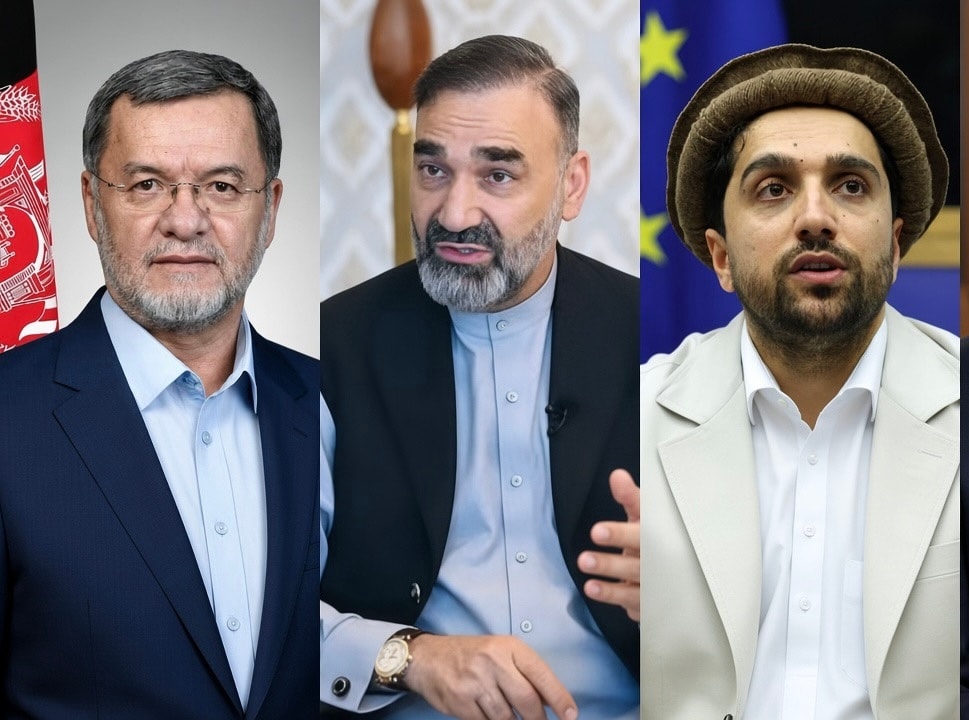
The National Council for the Salvation of Afghanistan and the Supreme Council of National Resistance for the Salvation of Afghanistan have called on countries around the world to refrain from any actions that could contribute to legitimizing the Taliban.
In a joint resolution, the two groups described opposition to the Taliban as part of the Afghan people’s “natural right” to free themselves from authoritarianism and political monopoly, and reaffirmed their support for efforts aimed at changing the country’s political situation.
The resolution was read out during a virtual conference titled “The Fifth Anniversary of the Handover of Power to the Taliban,” which was attended by a number of political figures and opponents of the Taliban.
The resolution states that on 24 Asad (August 15), Afghanistan’s state-building, democratic governance, and development process came to a halt, and the country came under the control of a group described as “reactionary, monopolistic, and lacking national legitimacy.”
The two groups said the Taliban’s rule is the result of the “imposition of force and violence” and that the group does not possess legitimacy derived from the free will of the Afghan people.
According to the resolution’s authors, the continuation of the current situation has intensified the crisis, instability, and political isolation and increased the suffering of the Afghan people. They warned that maintaining the status quo could pose serious challenges to the country’s future.
The resolution condemned the Taliban’s “authoritarian and monopolistic policies,” arbitrary arrests, torture, suppression of freedom of expression and the media, and the removal of professional and qualified personnel from government institutions.
The signatories also condemned the creation of a climate of fear and widespread violations of citizens’ fundamental and human rights, calling for an end to these practices and for the protection of the basic rights of the Afghan people.
Another section of the resolution condemned “extrajudicial killings, enforced disappearances, and other serious violations of the right to life.” The two groups called for an immediate end to such abuses and for those responsible to be held accountable.
The National Council for the Salvation of Afghanistan and the Supreme Council of National Resistance described the systematic exclusion of women from various areas of social life as an “outright crime against human dignity” and a violation of fundamental human rights.
The resolution states that restrictions imposed on women will not only harm Afghanistan’s current generation but will also expose future generations to serious risks.
The two groups also condemned ethnic and religious discrimination, specifically referring to Hazaras and followers of the Shia faith. They stressed that all ethnic groups and religious communities in Afghanistan must enjoy equal rights.
The resolution emphasizes that no individual or group should discriminate among Afghan citizens on the basis of ethnicity, religion, or language, and that the rights of all people must be guaranteed regardless of their ethnic or religious identity.
The National Council for the Salvation of Afghanistan and the Supreme Council of National Resistance also called for preventing terrorist groups from using Afghan territory and stressed the need for responsible cooperation by the international community in combating terrorism.
The resolution described Afghanistan’s economic situation as “deeply concerning.” Widespread poverty, unemployment, declining production, reduced investment, growing dependence on humanitarian assistance, and the large-scale migration of young people, intellectuals, and skilled professionals were cited among the consequences.
The authors of the resolution also identified growing public despair as another consequence of the current conditions and called for measures to improve Afghanistan’s economic and social situation.
The two groups characterized the struggle by organizations, political forces, national figures, resistance fronts, and other groups opposed to the Taliban as part of the “natural right of the Afghan people to free themselves from authoritarianism and monopoly.”
The resolution concludes that Afghanistan’s future can only be secured through the establishment of a political system that reflects the free will of the people a system based on elections, justice, the rule of law, equitable participation of all ethnic and religious groups, respect for human rights, preservation of national unity, and the protection of human dignity.
Writer:Salima Aryaei