
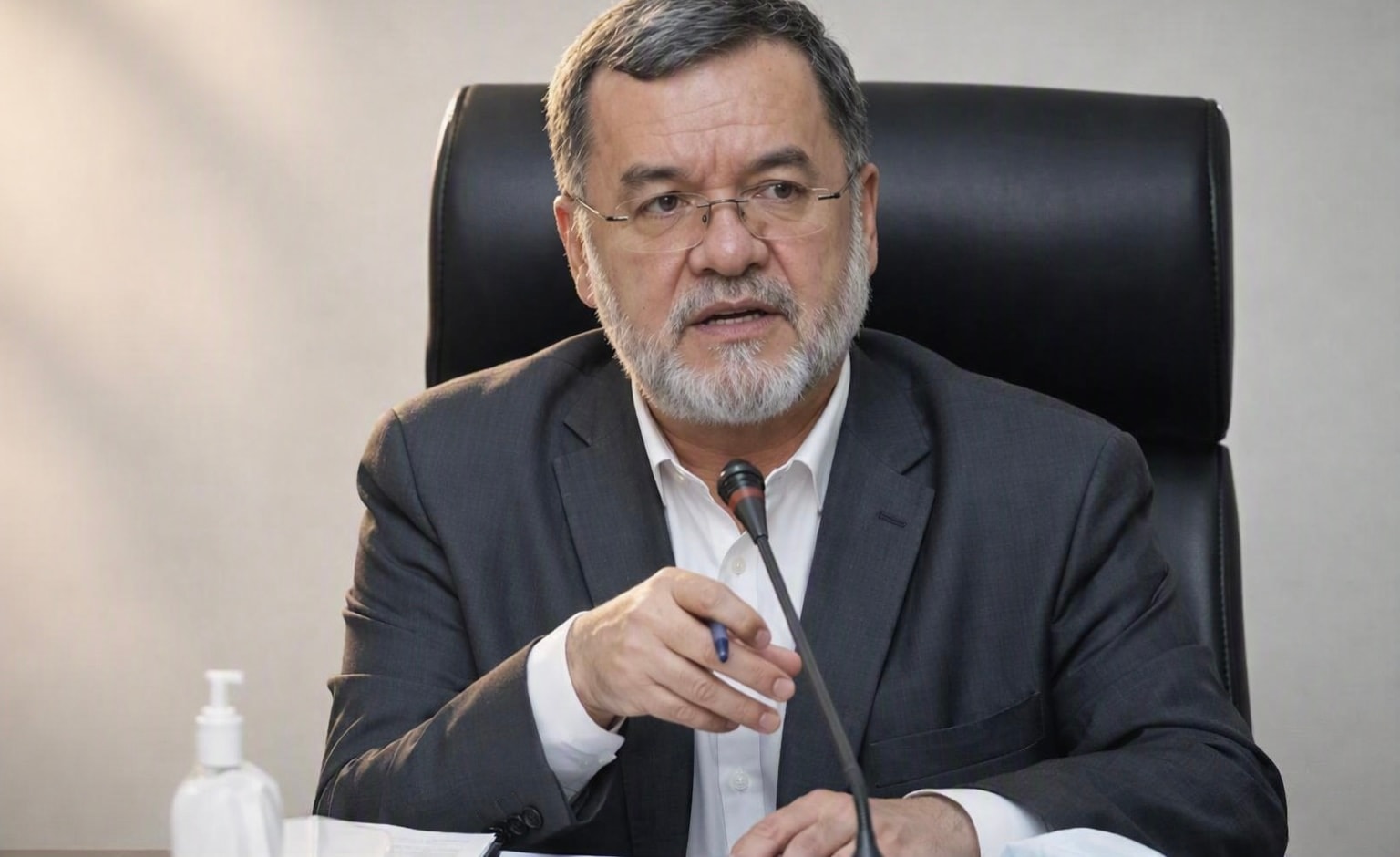
Former Afghan vice president Sarwar Danish has called for the establishment of a “government in exile” as the highest decision-making authority, saying such a structure could pave the way for the formation of a transitional period in Afghanistan.
Danish made the remarks on Sunday during a virtual conference titled “The Fifth Anniversary of the Handover of Power to the Taliban.” The conference was organized by the National Council for the Salvation of Afghanistan and the Supreme Council of National Resistance for the Salvation of Afghanistan.
Danish said that, under the current circumstances, two opposing sides have emerged. According to him, one side consists of advocates for justice, while the other is represented by the Taliban. He described the Taliban as an authoritarian group that supports “gender apartheid,” saying the group stands in opposition to the people of Afghanistan, women, and the international community.
He emphasized that opposition to the Taliban does not mean opposition to any particular ethnic group, culture, or language. Rather, he said, the goal is to create conditions in which the people of Afghanistan can live together peacefully and as brothers.
“What we oppose is the logic of monopoly,” Danish said. He added that one form of authoritarianism should not be replaced by another and that no individual or group should claim to possess absolute truth.
The former vice president warned that even if the Taliban were to fall one day, failure to address the underlying causes of Afghanistan’s political and social crises could lead to a repetition of the cycle of violence and civil war witnessed during the 1990s.
He highlighted the role of both the structure and substance of the political system in creating Afghanistan’s problems, saying that political authoritarianism has existed throughout different periods of the country’s history.
Danish added that Afghanistan’s ethnic communities have distinct historical and geographical identities, but all citizens must enjoy equal rights, and no group should be deprived of its civil rights because of its ethnicity or background.
He also called for the decentralization of Afghanistan’s political system, saying that the devolution of authority to local administrations, regional autonomy, and federalism are among the mechanisms for decentralizing power and could provide suitable models of governance for Afghanistan.
Danish attributed a significant portion of Afghanistan’s destruction to ideology and extremism within political systems, saying that such approaches have, at different points in the country’s history, restricted or stripped the Afghan people of their freedoms and rights.
He said that all monopolists, whether consciously or unconsciously, place themselves in the position of absolute rulers. According to Danish, these “self-proclaimed gods” must be removed from power and political authority must be returned to the people.
Danish further identified “religious democracy” as his proposed model for Afghanistan’s future political system. Such a system, he said, should guarantee civil liberties and freedom of expression, ensure equal rights for all citizens, distribute power fairly, and provide opportunities for everyone to participate in political life.
Writer:Salima Aryaei