
Gordon Brown, the former Prime Minister of the United Kingdom and the United Nations Special Envoy for Global Education, has called on the international community to provide more practical and effective support for the education of Afghan girls. In an article published in The Guardian, he proposed the creation of a global fund to support girls who are at risk of forced marriage.
The article was published as the fifth anniversary of the Taliban’s return to power approaches. In the piece, Brown writes that over the past five years, the Taliban have imposed successive decrees that have expanded restrictions and pressure on women and girls, while the international community has so far failed to take effective action to address the situation.
The UN Special Envoy refers in his article to the shooting by Taliban forces at women’s rights protesters in the city of Herat in the month of Jawza. According to Brown, the incident received limited international attention despite the fact that two people, including a teenager, were killed and several others were injured during the protests.
He writes that the protesters had chanted “Freedom” while objecting to the denial of education for girls, restrictions imposed on women’s clothing, and the reduction of their social freedoms. In his view, these events demonstrate the intensifying restrictions faced by Afghan women and girls.
Brown also alleges that, by introducing stricter laws, the Taliban have created conditions that legitimize child marriage and provide legal protection for certain cases of domestic violence. Citing assessments by some UN observers, he described these measures as part of what has been referred to as “gender apartheid.”
The former British prime minister noted that despite the expenditure of more than one trillion dollars, the deaths of thousands of soldiers, and the deployment of more than one million coalition personnel in Afghanistan, the international community has failed to prevent the erosion of women’s most basic rights. He said Afghanistan is now facing one of the most extensive systems of restrictions against women in the world.
The article highlights the ban on girls’ education beyond certain levels, the exclusion of women from university education, restrictions on employment in government institutions and non-governmental organizations, and limitations on women’s freedom of movement. Brown described these restrictions as among the most significant challenges facing Afghan women today.
He also referred to the reported killing of a 15-year-old girl and her mother by a Taliban official after they resisted a forced marriage. The account was presented in the article as an example of the consequences of forced marriage and violence against women.
Comparing Afghanistan’s situation with countries such as Pakistan and Bangladesh, Brown pointed to several experiences that have helped reduce child marriage. These include criminalizing marriage for individuals under the age of 18 in Pakistan’s Sindh province, strengthening birth registration systems in Bangladesh, and implementing financial support programs for low-income families to help children continue their education.
He emphasized that these examples show child marriage is not solely linked to cultural traditions, but is also directly connected to factors such as poverty, weak enforcement of laws, and lack of access to education. According to Brown, effective education remains the most powerful tool for reducing early marriage.
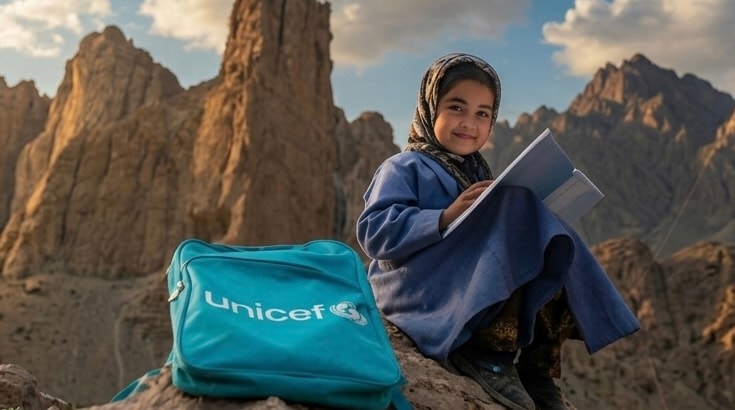
The UN Special Envoy added that despite the restrictions, some girls in Afghanistan continue their education through online learning, underground schools, and home-based classes. However, he said these efforts alone cannot meet their educational needs and require broader support.
Brown also referred to a new initiative by the British government that aims to support Afghan girls through two channels: relocating some girls to the United Kingdom in cooperation with charitable organizations, and providing university scholarships. However, he said these measures are insufficient and called for broader programs.
Brown proposed establishing a global fund to support Afghan girls, through which scholarships and opportunities for girls at risk of forced marriage to continue their education outside Afghanistan could be provided. He also expressed his willingness to cooperate with educational institutions and charitable organizations in implementing the initiative.
The former British prime minister concluded his article by describing support for Afghan girls as a moral responsibility of the international community. He called on governments and international organizations to prioritize practical and sustained assistance for girls who are striving for education and a better future.
Writer:Salima Aryaei