
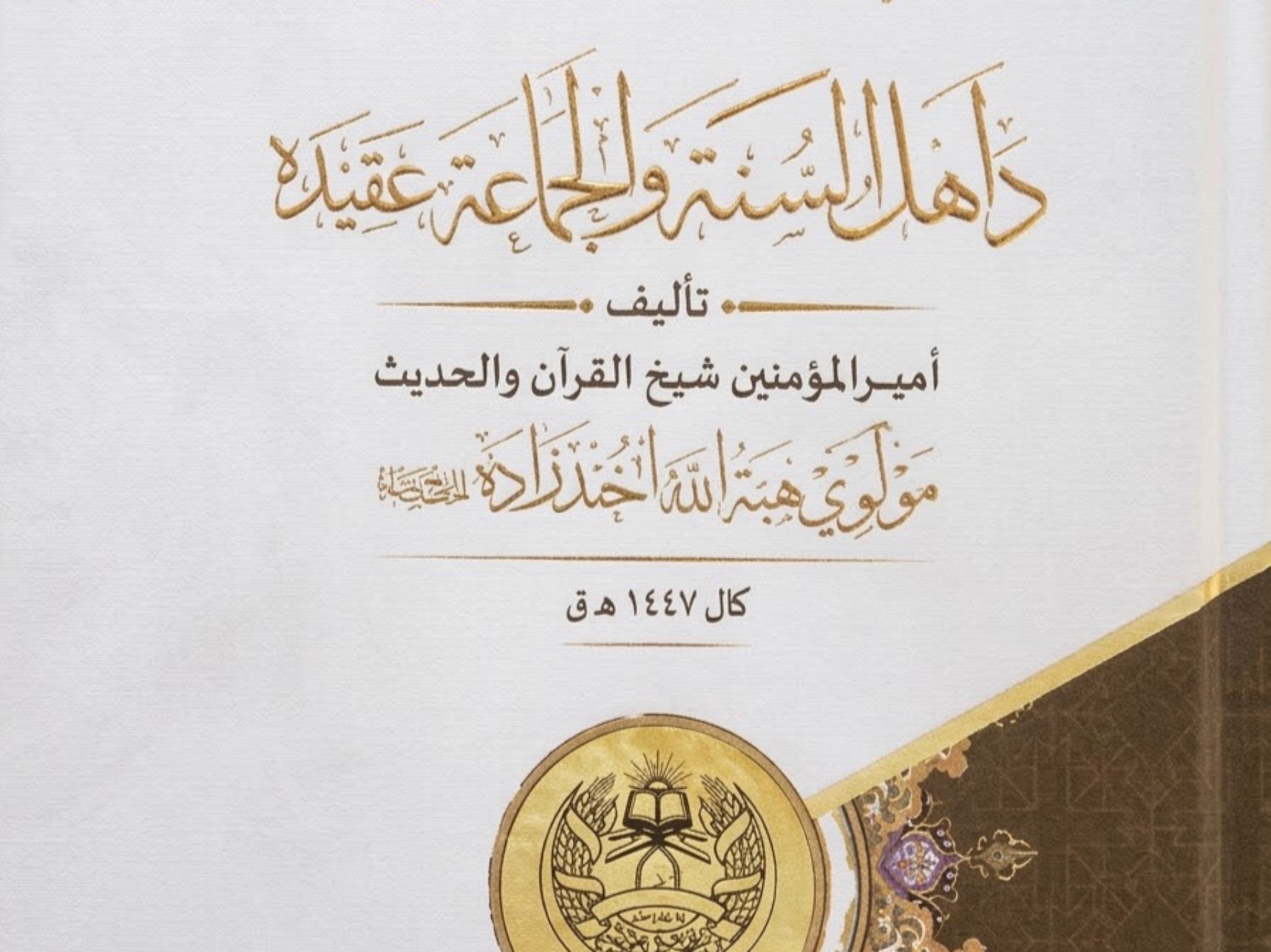
In a book attributed to Hibatullah Akhundzada, the leader of the Taliban, entitled The Creed of Ahl al-Sunnah wa al-Jama‘ah, emphasis is placed on obedience to the emir, and opposition to him is considered contrary to Sharia, even if he commits acts of oppression. Critics of this position argue that such an interpretation of religious obedience, rather than prioritising justice and people’s rights, creates the conditions for consolidating the absolute power of the ruler.
In this debate, reference is made to verse 59 of Surah An-Nisa, which calls upon Muslims to obey Allah, the Messenger, and those vested with authority among them. According to this interpretation, the phrase “Ulul-Amr minkum” means those vested with authority from among the Muslim community and may be understood in connection with public consent and the people’s choice, rather than the seizure of power through force and violence.
Critics emphasise that if an individual imposes himself on the people through coercion and claims to be the embodiment of Ulul-Amr, the legitimacy of that claim is open to question. In their view, even acknowledging a ruler’s position does not necessarily entail unconditional obedience to him.
Islamic hadith literature also emphasises the limits of obedience. In Sahih al-Bukhari and Sahih Muslim, the Prophet Muhammad is reported to have said: “Innama al-ta‘atu fi al-ma‘ruf” meaning that obedience is required only in matters that are good and lawful. Furthermore, the aforementioned verse from Surah An-Nisa establishes that, in the event of disagreement, reference must be made to Allah and the Messenger as the ultimate authorities.
On pages 128 and 129 of the book, under the heading of the Seventy-Ninth Article of Creed, it states that Muslims must not rise up against their rulers, even if those rulers commit acts of oppression, unless they command something contrary to the injunctions of Allah.
Critics of this position argue that merely condemning oppression in principle is insufficient if, in practice, people are deprived of their right to protest and seek justice. To explain this point, they refer to verse 39 of Surah Al-Hajj, which grants permission to those who have been wronged to defend themselves. They also cite verse 113 of Surah Hud, in which Muslims are prohibited from inclining towards or relying upon those who commit injustice.
From this perspective, advising rulers and working to reform their conduct are also regarded as part of Muslims’ religious responsibilities. Accordingly, discouraging armed rebellion to prevent discord and bloodshed does not necessarily mean accepting oppression or denying people their right to seek redress.
The discussion further emphasises that the Qur’an regards justice and the proper discharge of trusts as fundamental principles governing the affairs of society. Verse 58 of Surah An-Nisa commands Muslims to return trusts to those entitled to them and to judge fairly between people.
This principle, therefore, does not address ordinary citizens alone; it also encompasses the responsibilities of those who hold power. The text of Al-’Aqidah al-Tahawiyyah likewise emphasises love for those who uphold justice and trustworthiness, as well as opposition to oppression and betrayal. Critics argue that the prohibition against rising up against a ruler must not be interpreted as a reason to disregard the responsibility to oppose injustice.
Another aspect of this debate concerns unity among Muslims. While the book emphasises the prevention of sectarian conflict, critics argue that genuine unity can only be achieved when differences of opinion are not used as a pretext for insulting, marginalising, or excluding others.
In their view, no political or religious movement can claim to be the sole representative of Islam simply by asserting that it represents Ahl al-Sunnah wa al-Jama‘ah. Differences in theology and Islamic jurisprudence have a long history in Islam, and declaring others to be unbelievers or excluding them from the fold of Islam requires sound evidence and adherence to established scholarly standards.
In conclusion, critics emphasise that no official or ruler should be exempt from accountability for justice and the rights of the people in the name of religion. Maintaining public order is important; however, preventing oppression and establishing lawful and peaceful avenues through which people can pursue justice are also fundamental responsibilities of governance. On this basis, obedience to a ruler must not become a justification for indifference in the face of oppression.
Writer:Roya Stanikzai