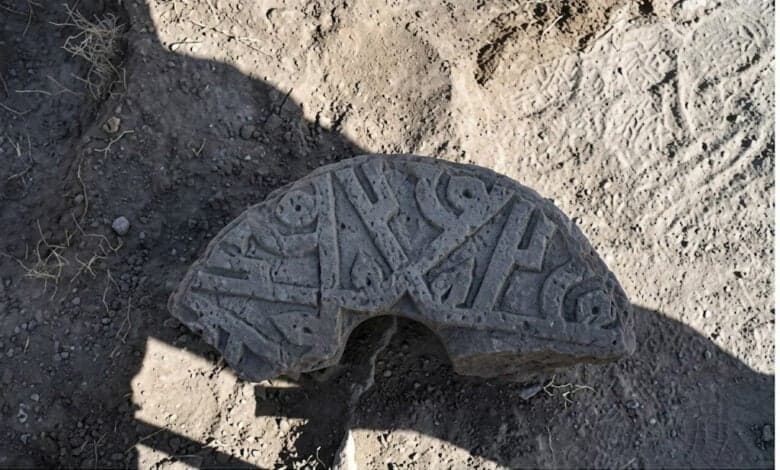

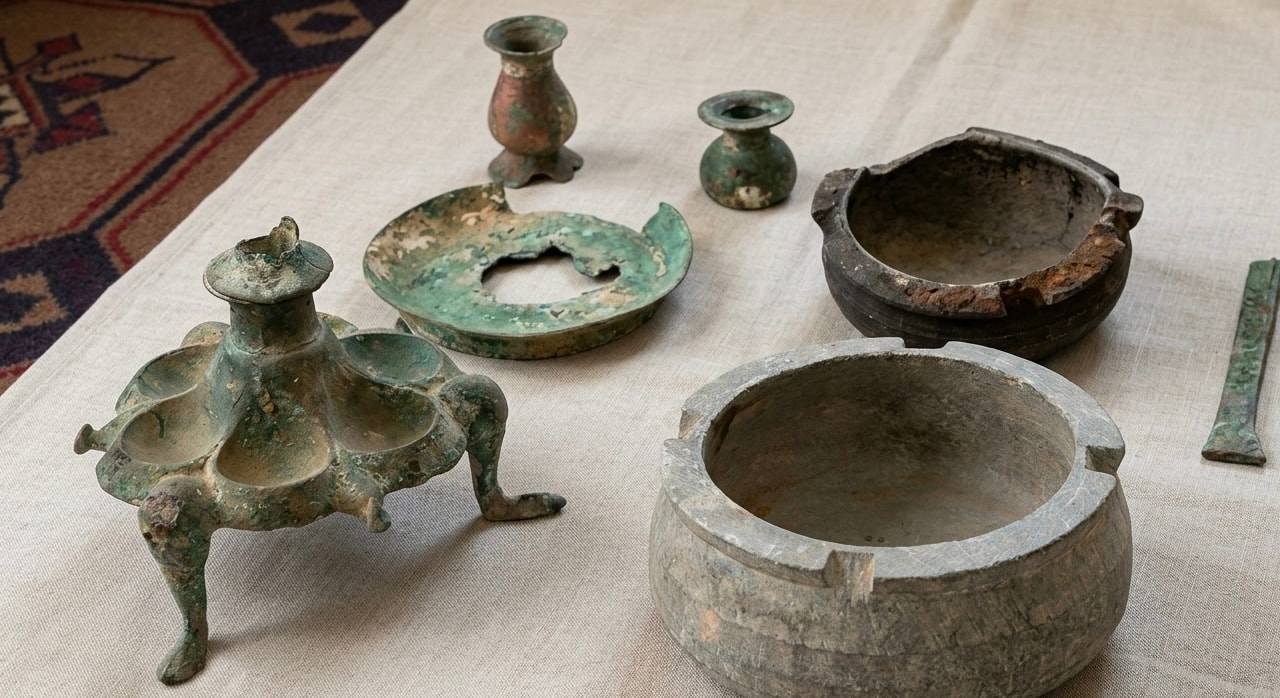
Several residents of Sar-e Pol Province have handed over seven historical artifacts, estimated to be around 300 years old, to the Taliban’s Department of Information and Culture after discovering them in a local area of the province.
In a statement released on Wednesday, June 23, the Taliban’s Ministry of Information and Culture said that the artifacts were discovered in the village of Farshqan in the Sancharak district of Sar-e Pol Province.
According to the information provided, the recovered items include a small cauldron, a lamp stand, a candlestick holder, a broken cauldron, an oil lamp container, a candle container, and two pieces of spoon handles. Officials have estimated the age of these objects at approximately 300 years.
Ahmad Shah Din Dost, the Taliban governor of Sar-e Pol, praised the local residents for handing over the artifacts, describing the act as a sign of public awareness and responsibility toward the country’s historical and cultural heritage.
Similarly, Abdul Ghafar Hagh Nema, head of the Taliban’s Department of Information and Culture in Sar-e Pol, stated after receiving the artifacts that the protection and preservation of historical relics is a shared responsibility of all citizens, and that efforts should be made to safeguard such valuable heritage.
The discovery comes amid growing concerns in recent years over the protection of Afghanistan’s cultural heritage. International organizations, including UNESCO, have repeatedly expressed concern about ongoing excavation activities, construction, and unregulated developments in some of the country’s historical areas.
UNESCO, in various reports and statements, has emphasized the need to protect historical sites and prevent damage to archaeological areas, particularly those included in the World Heritage List.
The protection of Afghanistan’s cultural heritage has long been a matter of concern for both domestic and international institutions. In 2001, the historic Buddha statues of Bamiyan—among the country’s most renowned cultural monuments—were destroyed, an event that drew widespread international condemnation.
Writer:Salima Aryaei