

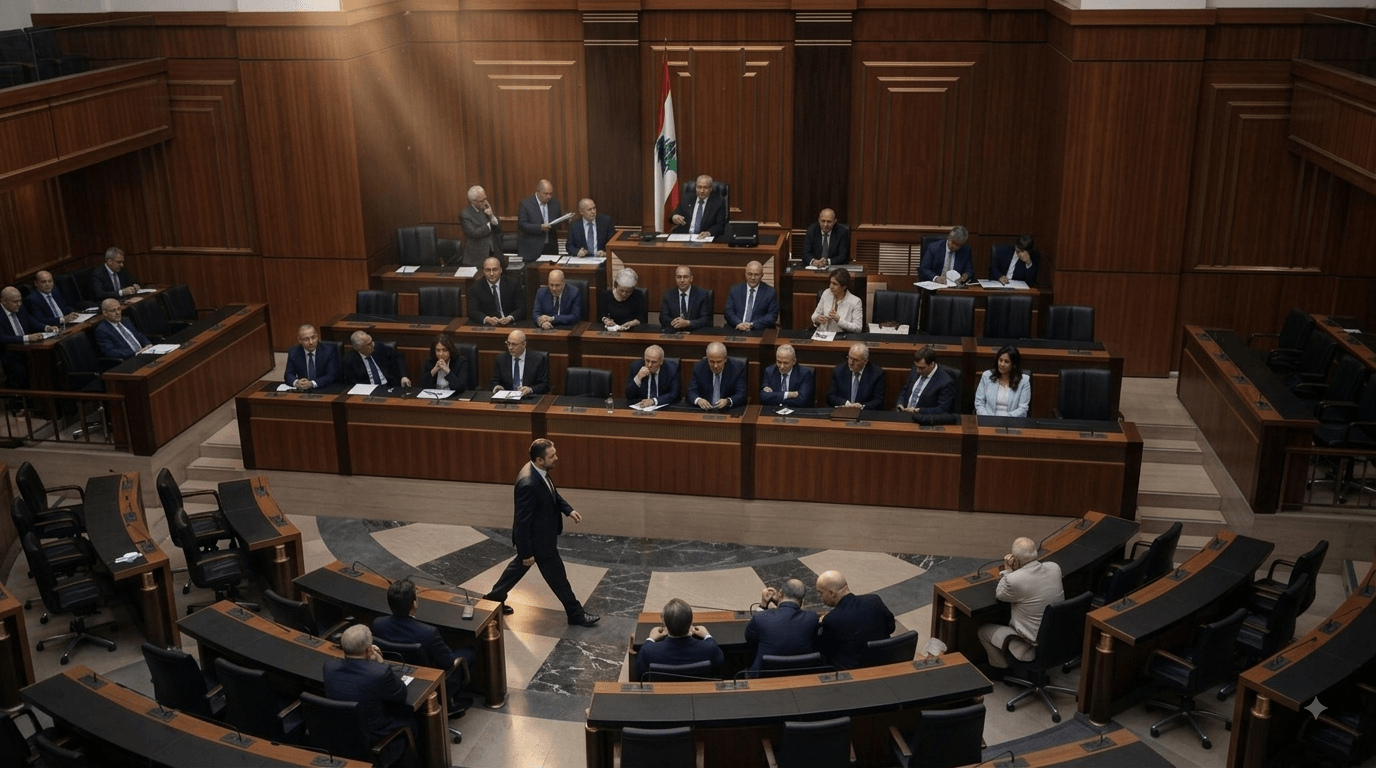
Lebanon’s parliament has voted to abolish the death penalty, replacing it with life imprisonment under the new legislation. With the adoption of this law, Lebanon will become the first Arab country in the Middle East to completely remove the death penalty from its legal framework.
A majority of members of parliament voted in favor of the bill, while the parliamentary bloc of Hezbollah opposed the abolition of capital punishment. The decision comes after years in which the death penalty had not been carried out in Lebanon, although it remained part of the country’s laws.
Adel Nassar, Lebanon’s Minister of Justice, who was present at the parliamentary session, described the abolition of the death penalty as a “historic step.” He stressed that eliminating capital punishment does not mean leniency toward crime and that severe penalties will continue to apply to serious offenses.
Lebanon had not carried out an execution since January 2004 and had, in practice, maintained an unofficial moratorium on executions. Nevertheless, the death penalty remained legally prescribed, and courts continued to issue dozens of death sentences over the past two decades.
Those sentences were not carried out because of the suspension of executions. In some cases, they were subsequently commuted to other forms of punishment. Thus, although Lebanon had effectively halted executions for years, the death penalty had not been formally removed from the law until the passage of the new legislation.
Under the new law, the death penalty will be replaced by “life imprisonment with aggravated hard labor.” However, the details regarding how this form of punishment will be implemented have not yet been fully clarified, and some lawmakers have also raised concerns about the practical application of the provision.
The adoption of the law represents a significant change in Lebanon’s criminal justice system, as it removes the death penalty from the country’s legal framework. Nevertheless, the precise implementation of the new law, including the definition and application of “aggravated hard labor,” remains subject to further clarification through implementing regulations.
Writer:Salima Aryaei