
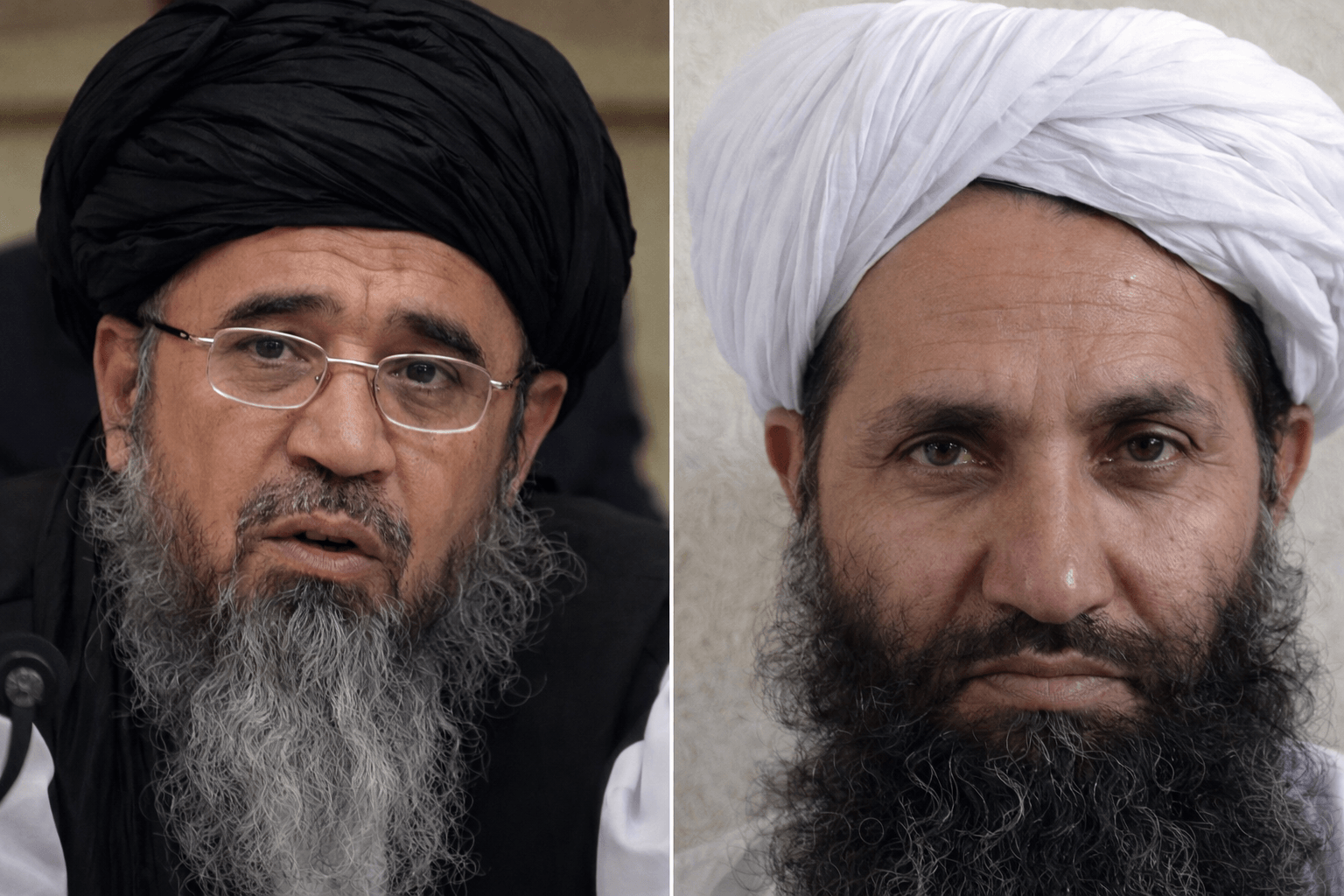
One year ago, on 8 July 2025 (17 Saratan 1404 in the Afghan calendar), the International Criminal Court (ICC) in The Hague issued arrest warrants for Taliban Supreme Leader Hibatullah Akhundzada and Abdul Hakim Haqqani, the Taliban’s Chief Justice, on charges of crimes against humanity.
The ICC announced that the two senior Taliban officials were being prosecuted for their alleged role in the systematic persecution of women, girls, and other individuals in Afghanistan on the basis of gender and political grounds. According to the Court, the available evidence provided reasonable grounds to believe that they bear criminal responsibility for these alleged crimes.
The Court stated that the warrants were issued on the basis of an extensive body of evidence, including reports by human rights organizations, testimony from witnesses and victims, media documentation, and official Taliban decrees. The Prosecutor concluded that the Taliban’s actions formed part of a deliberate and organized policy aimed at the systematic exclusion of women from public life.
According to the ICC, since 15 August 2021, the two senior Taliban officials have played a central role, through the issuance of official decrees, rulings, and policies, in depriving women and girls of their fundamental rights, including access to education, employment, freedom of movement, freedom of expression, and freedom of religion or belief. The Court determined that these actions constitute gender-based persecution, a crime against humanity under the Rome Statute.
The Prosecutor cited the ban on girls’ education, restrictions on women’s employment, severe limitations on women’s freedom of movement, the suppression of protesters and civil society activists, and other discriminatory measures imposed on women as key evidence in the case. According to the Court’s assessment, Hibatullah Akhundzada, as the highest decision-making authority within the Taliban, bears primary responsibility for these policies.
The Taliban immediately rejected the warrants, declaring that they do not recognize the jurisdiction of the International Criminal Court. In contrast, numerous human rights officials and advocates including Richard Bennett, the United Nations Special Rapporteur on the situation of human rights in Afghanistan; Heather Barr, Associate Director of the Women’s Rights Division at Human Rights Watch; Nobel Peace Prize laureate Malala Yousafzai; and a number of Afghan human rights activists welcomed the decision, describing it as a significant step toward justice.
Despite the issuance of the arrest warrants, the ICC has no independent enforcement mechanism, and the execution of its warrants depends on states that are parties to the Rome Statute. To date, the warrants have not been enforced, largely because the Taliban leadership remains in Afghanistan and continues to exercise effective control over the country.
Now, one year after the warrants were issued, no arrests have been made. Nevertheless, the warrants remain legally valid and continue to carry significant legal and political implications for the Taliban’s international engagement and diplomatic relations.
Writer:Salima Aryaei