
The Criminal Court of Qom Province in Iran has sentenced Parastoo Ahmadi, a singer, and eight other individuals involved in the production and performance of the so-called “Caravanserai Concert” to discretionary flogging, a ban on artistic activity, and a travel ban.
According to the issued ruling, each of the defendants has been sentenced to 74 lashes as a discretionary punishment, a two-year prohibition from engaging in any professional activity in the fields of music and the arts, and a two-year ban on leaving the country. The verdict also includes the order to publish the conviction in the mass media.
In this case, the Criminal Court of Qom, citing provisions of the Islamic Penal Code and the Computer Crimes Law, rejected the defendants’ arguments and found them guilty of “offending public modesty through the production and dissemination of obscene and immoral content in cyberspace.”
The verdict is a first-instance ruling, and under Iranian judicial law, the defendants may file an objection or request an appeal within the prescribed legal timeframe.
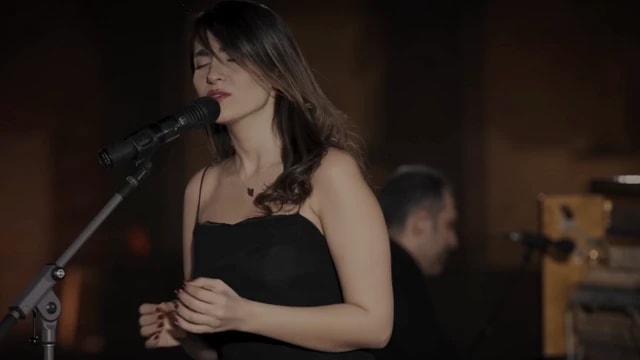
The video of the “Caravanserai Concert” was published on Parastoo Ahmadi’s YouTube channel in the month of Qows 1403 (approximately November–December 2024) and quickly gained widespread attention on social media. Within a few hours of its release, the video garnered more than 100,000 views, and its total view count has now reached approximately 3 million.
In the performance, Parastoo Ahmadi appeared on stage without mandatory hijab, a matter that generated extensive reactions across media outlets and social networks.
Following the release of the video, Iran’s Judiciary opened a legal case against those involved in the performance, and the venue of the concert at the historic “Deyr-e Gachin” caravanserai was also sealed.
Parastoo Ahmadi had previously written in a description of the performance on her YouTube channel: “I, Parastoo a girl who wants to sing for the people I love. This is a right I could not turn away from.”
The names of those convicted in this case include Parastoo Ahmadi, Soheil Faghih Nasiri, Amirali Pirnia, Mohammadamin Taheri, Ehsan Baqerdar, Mohsen Lashgari, Abdolreza Bchari, Seyed Majid Mohseni-Moqaddam, and Tahmineh Monzavi.
The report comes at a time when issues surrounding artistic activity and related restrictions in Iran continue to be widely discussed in media and social discourse.
Writer:Salima Aryaei