
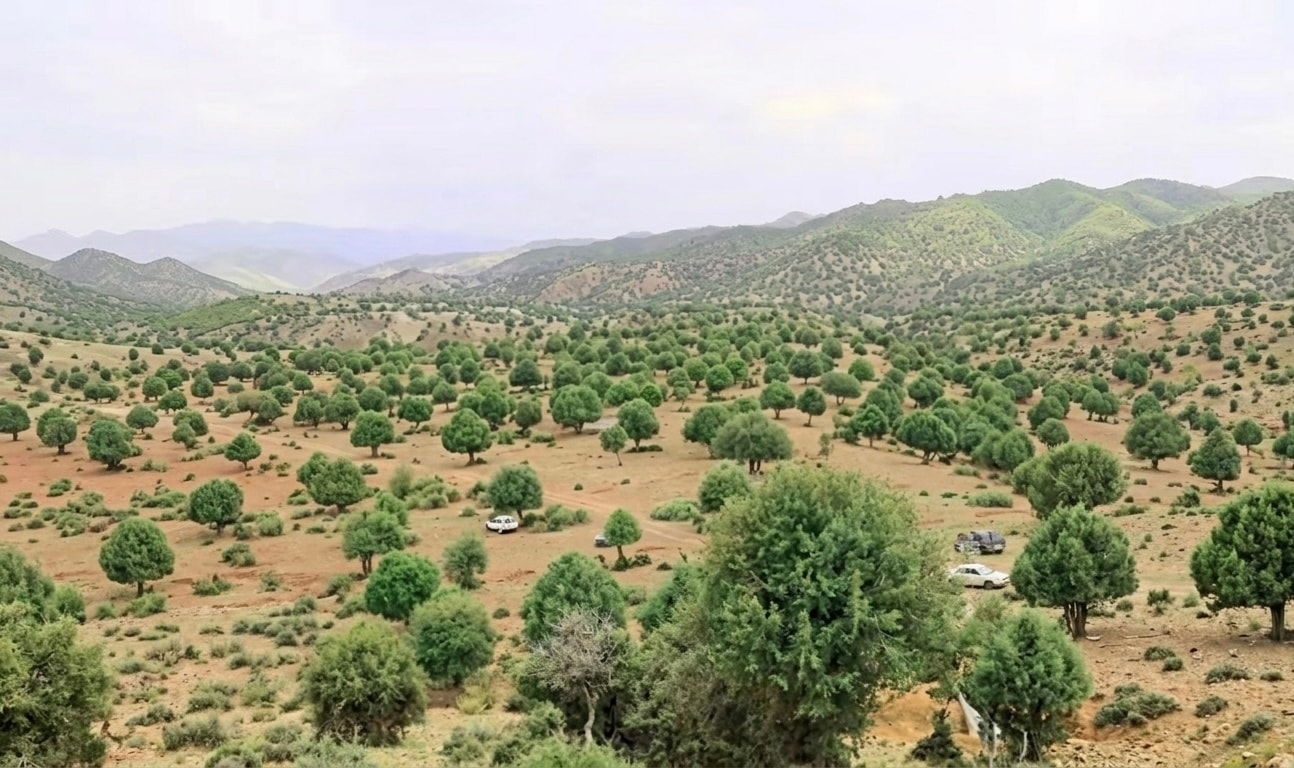
Agence France-Presse (AFP), citing Afghanistan’s National Statistics and Information Authority under the Taliban administration, has reported that the country’s forest cover has increased by 35 percent since 2011. According to the report, the expansion of tree-planting initiatives, the implementation of forest restoration projects, and the active participation of local communities have been the primary drivers behind this growth.
Official statistics indicate that the total area of Afghanistan’s forests has expanded compared to 2011. Nevertheless, the report notes that forests still account for only 2.5 percent of the country’s land area as of 2025, and deforestation continues in certain regions.
Mohammad Naser Shalizi, a researcher at North Carolina State University, stated that approximately 50 percent of Afghanistan’s forest cover was lost between the Soviet invasion of 1979 and the collapse of the first Taliban government in the early 2000s.
According to Shalizi, timber smuggling to Pakistan has been one of the principal causes of widespread deforestation in eastern Afghanistan. In the central and northern regions, known collectively as the “Pistachio Belt,” the use of wood for heating and cooking has also contributed significantly to the degradation of forest resources and vegetation cover.
Despite these challenges, Shalizi emphasized that the rate of deforestation in Afghanistan has declined substantially over the past two decades and that conservation efforts have yielded encouraging results.
Environmental experts argue that in a country such as Afghanistan with its vast, remote landscapes and limited governmental resources community-based forest management remains one of the most effective strategies for protecting and restoring natural ecosystems.
The activities of humanitarian and development organizations have also played a crucial role in supporting local communities in tree planting and raising public awareness about the importance of environmental conservation, thereby contributing to the increase in tree cover.
At the same time, experts caution that greater efforts are required to preserve old-growth forests and expand forest cover in natural habitats. They stress that environmental initiatives should not be confined solely to urban greening projects.
Apurva Oza, Head of Climate Change at the Aga Khan Foundation, told AFP that while promising environmental initiatives are underway in Afghanistan, substantially greater investment and effort will be needed to address the impacts of climate change and global warming.
The Foundation reported that it has established approximately 500 microforests across seven provinces of Afghanistan. Parisa Malekzadeh, the Foundation’s Agriculture Coordinator for Afghanistan, stated that these microforests contribute to ecosystem restoration, improve soil fertility, strengthen resilience to climate change, and enhance local livelihoods.
Meanwhile, Taliban authorities have set a target of planting approximately 200 million trees across Afghanistan between 2023 and 2030. The plan envisages cooperation with non-governmental organizations, United Nations agencies, and the private sector to achieve this objective.
Ruhullah Amin, Head of the Climate Change Department at the National Environmental Protection Agency, stated that while the target for the previous year had been the planting of eight million trees, a total of 17 million trees were ultimately planted across various parts of the country. According to Amin, the target for the current year is nine million trees.
Despite these advances, several challenges continue to threaten forest expansion efforts, including water scarcity, the selection of suitable native species, prolonged droughts, and damage to saplings caused by livestock. Assessments conducted by the Environmental Protection Agency indicate that some forested areas have suffered significant losses due to insufficient water resources and inadequate maintenance. In one region, for example, drought conditions led to the destruction of approximately 70 percent of its pine trees.
In several parts of Afghanistan, local and tribal councils have assumed responsibility for forest protection and impose penalties on individuals who damage natural resources. In addition, forest management associations have been established in certain provinces with the participation of local residents and farmers.
The Food and Agriculture Organization of the United Nations (FAO) has supported these associations since 2019 and has facilitated the planting of approximately five million trees in various regions of the country.
While these developments represent meaningful progress in Afghanistan’s environmental recovery, experts emphasize that sustained commitment, enhanced resource management, and long-term investment will be essential to safeguard existing forests and build resilience against the growing challenges posed by climate change.
Writer:Salima Aryaei