

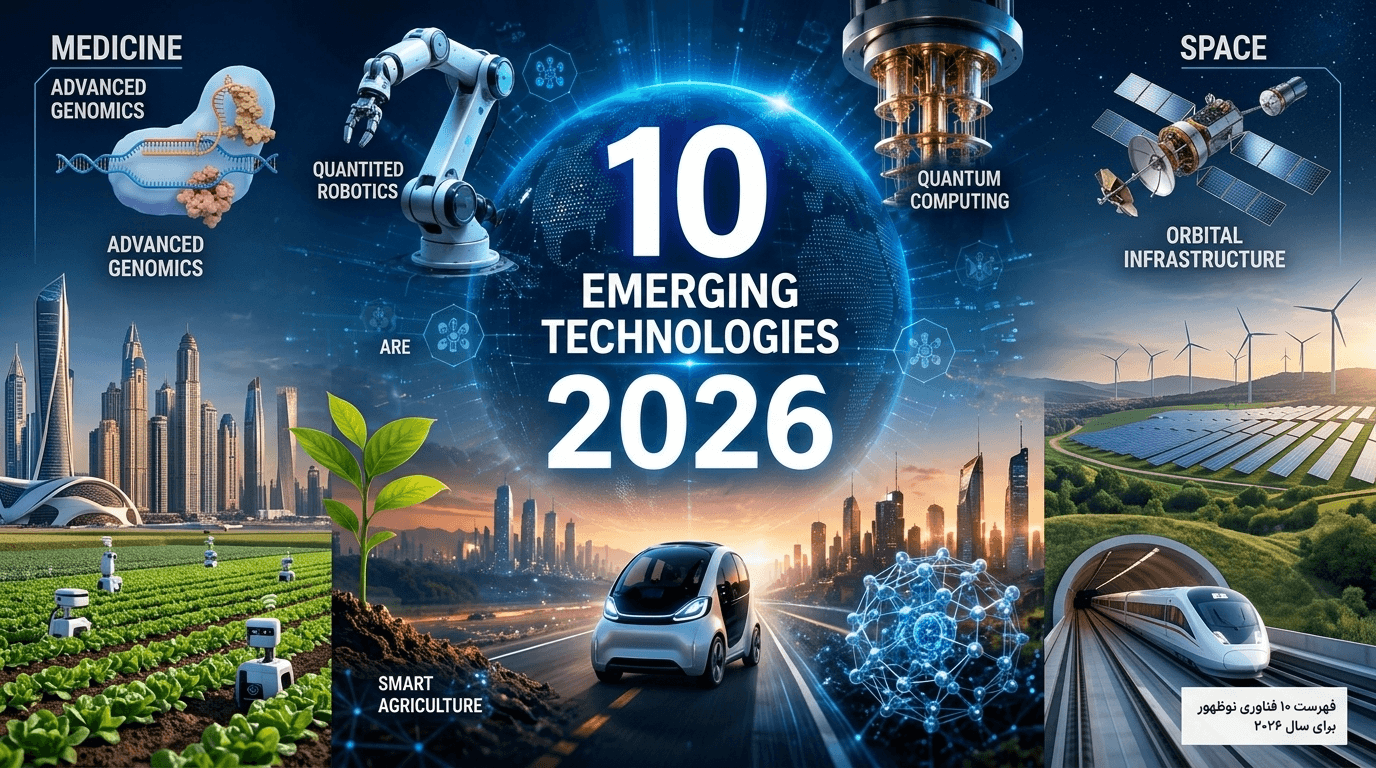
The annual report titled “Top 10 Emerging Technologies of 2026” has been published, highlighting a set of the most significant scientific and technological innovations with the greatest potential to transform human life in the years ahead. The report was prepared in collaboration with a group of international scientists and experts and includes technologies that have moved beyond the experimental stage and are on the verge of widespread integration into everyday life.
According to the report, the ten leading technologies of 2026 are as follows:
Artificial intelligence in drug discovery: A technology that accelerates the development of new medications by analyzing vast amounts of medical and biological data, potentially playing a crucial role in treating complex diseases.
Solid-state batteries: A new generation of batteries that are safer, more durable, and more efficient than current technologies, capable of driving major advances in electric vehicles and energy storage systems.
Nuclear fusion energy: A clean and nearly limitless energy source that, if successfully commercialized, could replace fossil fuels and reshape the global energy landscape.
CRISPR-based gene editing: An advanced method for precise gene modification that enables the treatment of genetic disorders and certain inherited conditions.
Lab-grown meat: A technology that produces meat by cultivating animal cells in a controlled environment, potentially reducing the environmental impact of conventional livestock farming.
Carbon capture from the atmosphere: A method aimed at combating climate change by removing carbon dioxide directly from the air and reducing greenhouse gas emissions.
Brain–computer interfaces: Technologies that enable direct communication between the human brain and digital devices, with potential applications in treating disabilities and enhancing communication abilities.
Quantum computing: A next-generation computing paradigm based on the principles of quantum physics, capable of solving highly complex problems in significantly shorter timeframes.
Advanced autonomous robots: Robots capable of independent decision-making, with expanding roles across industries, transportation, and services.
Synthetic biotechnology: An emerging field focused on designing and engineering biological systems or organisms for applications in medicine, energy, and environmental sustainability.
The report concludes that the selection criteria for these technologies include the level of innovation, readiness for market deployment, and their potential impact on human life. Many of these breakthroughs are now approaching commercialization and are expected to bring profound global transformations in the coming years.
Writer:Salima Aryaei