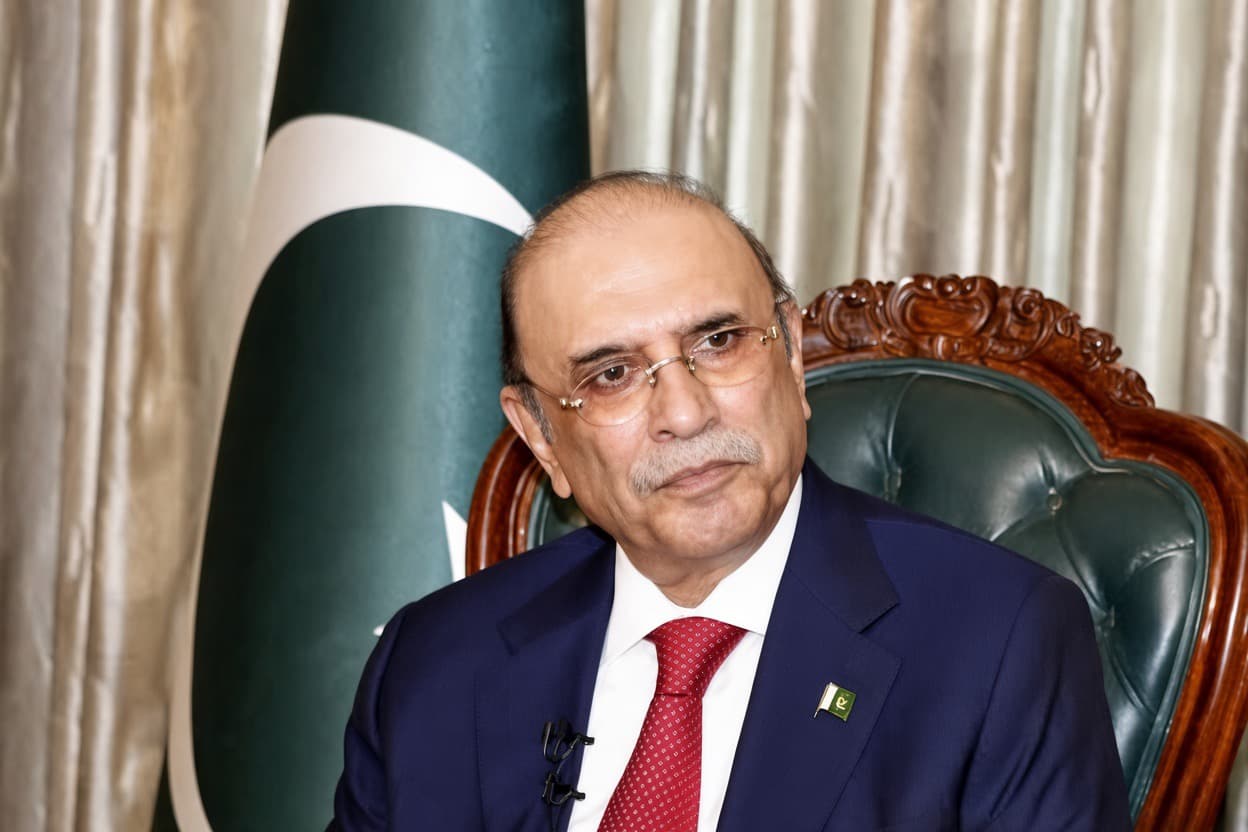

The British government has updated information on Sirajuddin Haqqani, the leader of the Haqqani Network, and Jalaluddin Haqqani, the network’s founder and former leader, in its Afghanistan-related sanctions list. London emphasized that the move does not mean sanctions against the two men have been lifted.
The UK Foreign, Commonwealth and Development Office (FCDO) on Thursday, August 27, revised and published the identifying details of Sirajuddin and Jalaluddin Haqqani in the Afghanistan sanctions list. The department said that the restrictions imposed on them remain in place.
According to the published information, the latest update was made solely to correct and complete the identifying details of the two individuals. The information includes details such as their ethnicity, place and date of birth, height, passport numbers, and records of their activities.
The UK said that Sirajuddin Haqqani and Jalaluddin Haqqani remain subject to asset-freeze and travel-ban restrictions. These measures are imposed under the UK’s Afghanistan sanctions regime, established in 2020.
Sirajuddin Haqqani, the Taliban’s acting interior minister and leader of the Haqqani Network, has been listed under United Nations Security Council sanctions since September 13, 2007. In addition to UN sanctions, he is also subject to UK sanctions.
In its profile of Sirajuddin Haqqani, the UK Foreign Office states that he has led the Haqqani Network and directed the group’s armed activities since late 2012. The department describes him as a senior figure within both the Haqqani Network and the Taliban.
Jalaluddin Haqqani, the founder of the Haqqani Network and father of Sirajuddin Haqqani, also remains on the UK sanctions list. His profile refers to reports of his death in September 2018 and describes him as a former Taliban leader.
The UK Foreign Office also states that Jalaluddin Haqqani was primarily engaged in armed activities in Afghanistan’s border areas. In previous years, the Haqqani Network was a major component of the Taliban’s military structure and played a role in armed attacks in Afghanistan.
Britain says the purpose of these sanctions is to impose restrictions on individuals involved in violence, those who play a role in supplying weapons or recruiting fighters, or those who support activities that, according to London, threaten peace and stability in Afghanistan.
The UK’s move comes as the United Nations Security Council also updated the identifying information of five senior Taliban officials on July 31, 2026, as part of its sanctions list. Sirajuddin Haqqani and several other senior Taliban officials were among those whose information was revised.
Writer:Salima Aryaei