
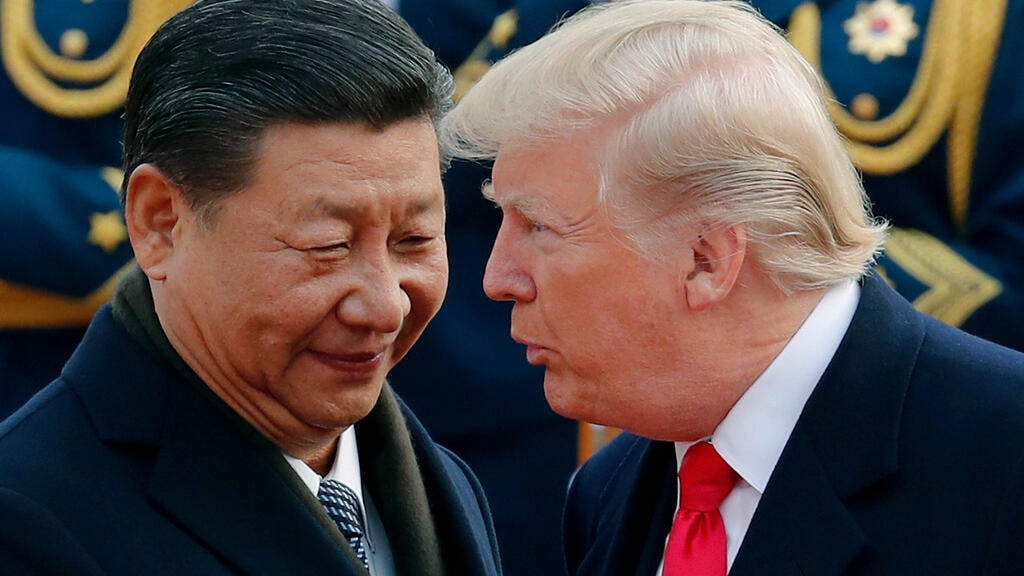
On Friday, U.S. President Donald Trump, in his final round of talks with Chinese President Xi Jinping, spoke about economic achievements and trade agreements between the two countries; however, these remarks failed to generate a positive reaction in global markets. At the same time, Beijing issued a warning regarding Washington’s approach toward Taiwan and emphasized that the “Iran war” should not have started.
Trump is the first U.S. president to visit China since his 2017 trip. China is currently one of the United States’ most significant strategic and economic rivals, and relations between the two countries have been marked by widespread tensions in recent years.
Reuters reported on Friday, May 15, that Trump, on the eve of the crucial U.S. midterm elections, is attempting to restore his waning popularity by achieving tangible results in foreign policy and the economy.
During the meeting with Xi Jinping at the Zhongnanhai government complex, while the two leaders sat on red decorative chairs, Trump said, “We have made several great trade deals; deals that are very good for both countries.”
Before the official meeting, the two leaders walked and talked outdoors in the complex. Trump praised the beauty of the roses, and Xi Jinping promised to send him the seeds of those flowers. Afterward, both leaders attended a formal dinner.
Meanwhile, during the visit, the Chinese Ministry of Foreign Affairs released a statement expressing concern over the Iran war. The statement read: “This conflict should not have occurred in the first place, and there is no reason for it to continue.”
The Chinese Foreign Ministry also emphasized that Beijing supports efforts to reach a peace agreement, a war that, according to Chinese officials, has had wide-ranging effects on energy supplies and the global economy.
Trump also stated at Zhongnanhai that he and Xi Jinping had discussed Iran and that the two sides’ views were “very close”; however, the Chinese president did not make any public comment on the matter.
Reuters wrote that it was expected that Trump would ask China to pressure Tehran to reach an agreement with Washington and end the war, which has caused price increases and domestic political pressure on the U.S. administration.
However, analysts believe it is unlikely that Xi Jinping will exert serious pressure on Tehran or stop China’s support for Iran’s military structure, as Iran remains a strategic partner and counterweight to the United States for Beijing.
Writer:Salima Aryaei