
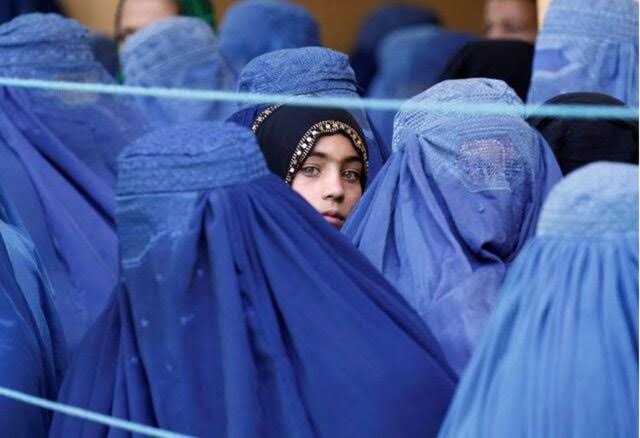
According to a recent directive issued by the Ministry of Hajj and Religious Affairs under Taliban administration, imams and preachers in mosques across Afghanistan’s capital and provinces have been advised to dedicate this week’s Friday sermons to explaining the characteristics of women’s hijab.
The directive emphasizes that, from the Taliban’s perspective, hijab must fully cover a woman’s entire body and that clothing should prevent the shape of the body from being visible. It also stresses the importance of wearing loose, thick, simple garments free of adornment and fragrance.
The guideline further prohibits women from wearing tight or form-fitting clothing, as well as garments designed to attract attention. It also states that women’s clothing should not resemble that of men or non-Muslims, and should not be used for display or to gain popularity.
The document describes unveiling as a “Jewish conspiracy” and refers to unveiled women as “hypocrites.” It also warns that lack of hijab and the mixing of men and women can lead to the spread of فساد (moral corruption) in society.
The directive comes amid broader restrictions imposed on women and girls in Afghanistan since the Taliban’s return to power in 2021, including limitations on education, employment, and social participation.
International organizations state that women in Afghanistan have been largely excluded from public life, and human rights activists and UN special rapporteurs have described the situation as “gender apartheid,” calling for increased international attention.
The Taliban, however, reject these allegations, stating that all their measures are in accordance with Islamic Sharia law.
Writer:Saeed Sameer