
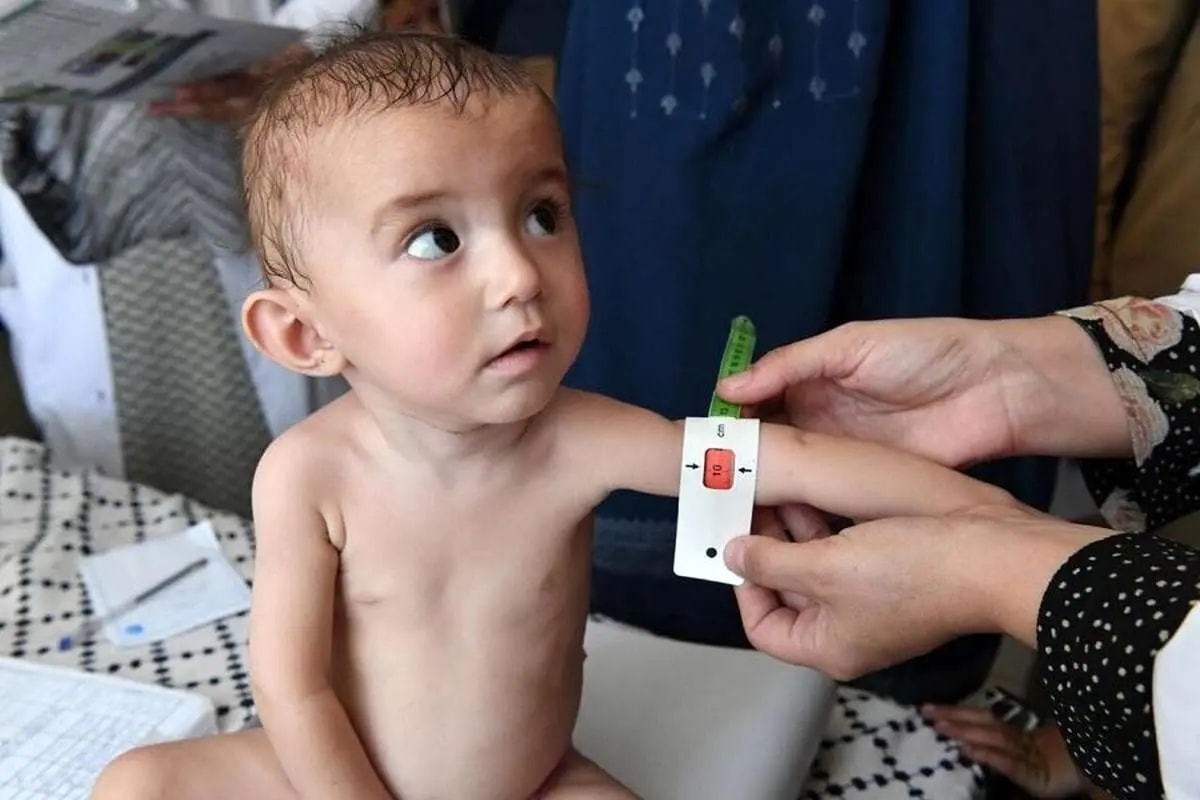
The United Nations Children’s Fund (UNICEF), in its latest report, has warned that nearly 3.7 million children under the age of five in Afghanistan are at serious risk of malnutrition due to food and nutrition insecurity.
The report, titled “Too Little, Too Late: The Child Food Crisis in Afghanistan,” highlights that limited dietary diversity, inadequate access to age-appropriate nutrition, irregular meal patterns, and hunger are among the primary factors contributing to the deterioration of children’s nutritional status.
UNICEF stated that, compared with 2025, the malnutrition situation has worsened in 26 of Afghanistan’s 34 provinces, with children under the age of two being the most severely affected.
Tajudeen Oyewale, UNICEF Representative in Afghanistan, said that Afghan children are being pushed toward malnutrition even before the onset of the peak malnutrition season, underscoring the urgent need for immediate action to prevent the crisis from escalating further.
UNICEF emphasized that the malnutrition crisis cannot be addressed through nutrition services alone. It requires a comprehensive response that includes access to safe drinking water, healthcare services, immunization, sanitation and hygiene, as well as adequate international assistance. The agency has called on the international community to increase its emergency funding and investment to help save the lives of Afghan children.
Writer:Saeed Sameer