
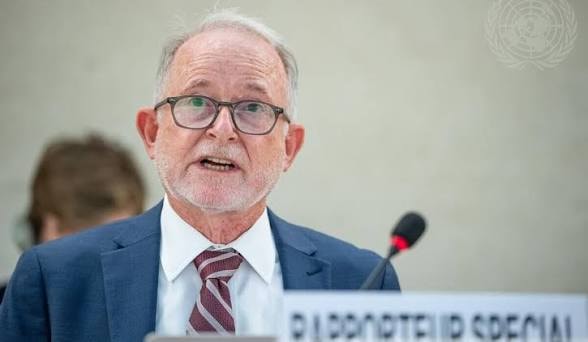
Richard Bennett, the United Nations Special Rapporteur on Human Rights in Afghanistan, called on the Taliban to immediately and unconditionally release all detained journalists ahead of World Press Freedom Day. He emphasized that media workers should be able to exercise their right to freedom of expression and continue their professional activities without fear of threats, harassment, or detention.
Referring to the situation of the media since the Taliban’s return to power, he stated that press freedom across Afghanistan has been alarmingly weakened, and independent journalism has been severely restricted. According to him, the imposed restrictions have created an environment that has led to widespread self-censorship among journalists and news sources.
Bennett added that individuals who speak with the media face threats, surveillance, and even detention, further weakening the free flow of information. He stressed that even routine reporting may be dangerous, especially when sensitive topics or critical issues related to the Taliban, women’s rights, and girls’ issues are discussed.
The UN Special Rapporteur also stated that threats and intimidation have become commonplace, and accusations of collaborating with foreign media lead to severe reactions from the Taliban. According to the Afghanistan Journalists Center, at least 34 cases of journalists being detained were registered in 2025.
He described the situation for female journalists as even more difficult, noting that in addition to workplace discrimination, they face serious restrictions on movement and are forced to adhere to mandatory dress codes. According to Bennett, these conditions are part of the process of shrinking civil space and increasing pressure on freedom of expression in Afghanistan.
Bennett also highlighted that censorship of books and restrictions on access to diverse sources of information have increased, and journalists even face punishment for engaging in social media activities. He warned that the Taliban’s criminal laws, with vague definitions, have criminalized criticism of public and religious figures, leading to widespread self-censorship and diminishing the space for public discourse.
While appreciating the resilience of Afghan journalists, both inside the country and in exile, Bennett expressed concern over the reduction of international financial and technical support for the media. He stated that these reductions have severely limited the media’s ability to operate safely, access information, and continue independent reporting.
In conclusion, the UN Special Rapporteur urged the international community to express solidarity with Afghan journalists on World Press Freedom Day, increase financial and technical support for independent media, and establish supportive mechanisms for individuals at risk. He emphasized that free and independent media are fundamental to human rights and an indispensable necessity for Afghanistan’s future.
Writer:Salima Aryaei