
According to a recent report by The New York Times, although the Taliban have imposed extensive restrictions on Afghan women, they have allowed some women to start businesses and small enterprises in order to prevent economic collapse. However, these women are still required to strictly adhere to the laws and restrictions set by the Taliban.
Based on interviews with 12 female entrepreneurs in Afghanistan, the newspaper reports that since the Taliban’s return to power, the deprivation of women’s right to education and work has left thousands of women without sources of income. Many of these women, who were the primary breadwinners for their families, have turned to small businesses and entrepreneurial activities to survive, but they face numerous challenges and obstacles.
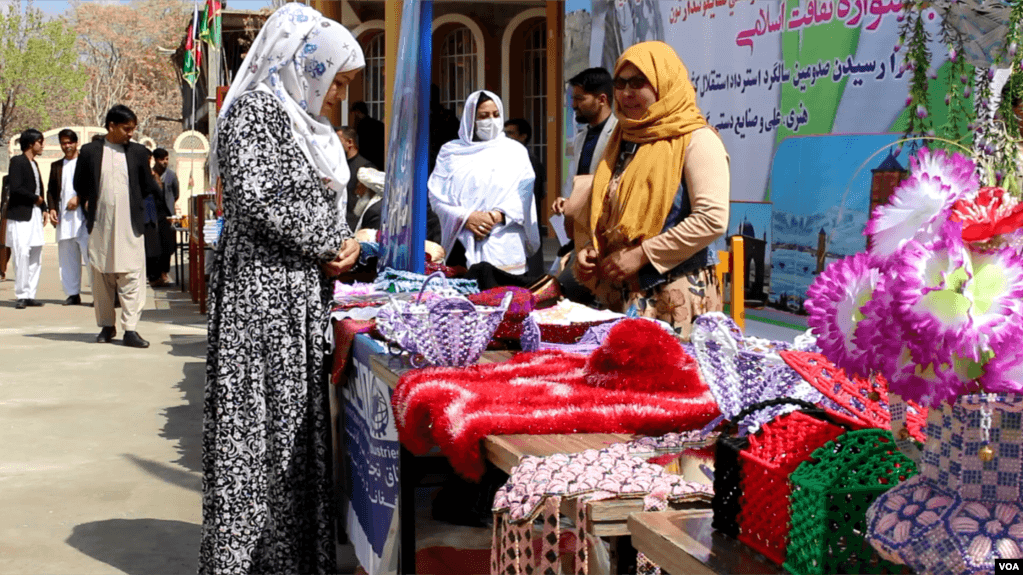
According to the report, girls and women who once dreamed of becoming lawyers, engineers, or university professors are now engaged in carpet weaving, cosmetics sales, and other vocational activities, as the Taliban do not permit women to work in many government and non-government institutions, as well as in beauty salons.
The report further states that working women are increasingly facing stricter restrictions. About two weeks ago in Herat, several women were subjected to harassment and arrests in connection with the enforcement of dress code regulations, and protests against these measures were also harshly suppressed.
After nearly five years of Taliban rule, trade and entrepreneurship are considered the last means of economic survival for many Afghan women. Behnaz Seljuki, a representative of women traders in Herat, said: “In Afghanistan, the only remaining hope for women is business.”
The report also indicates that in various provinces, many female entrepreneurs are unable to travel independently to Kabul or other provinces to market and sell their products due to the absence of a male guardian.
The Taliban’s Ministry of Labor and Social Affairs spokesperson, Samiullah Ebrahimi, stated that women are permitted to engage in business activities provided they comply with what he described as “principles.”
According to the Afghanistan Chamber of Commerce and Industries, more than 10,000 women currently hold official business licenses. However, the World Bank estimates that around 120,000 additional women are engaged in small businesses without formal licenses, making small-scale entrepreneurship one of the largest sources of employment for Afghan women.
Writer:Saeed Sameer