
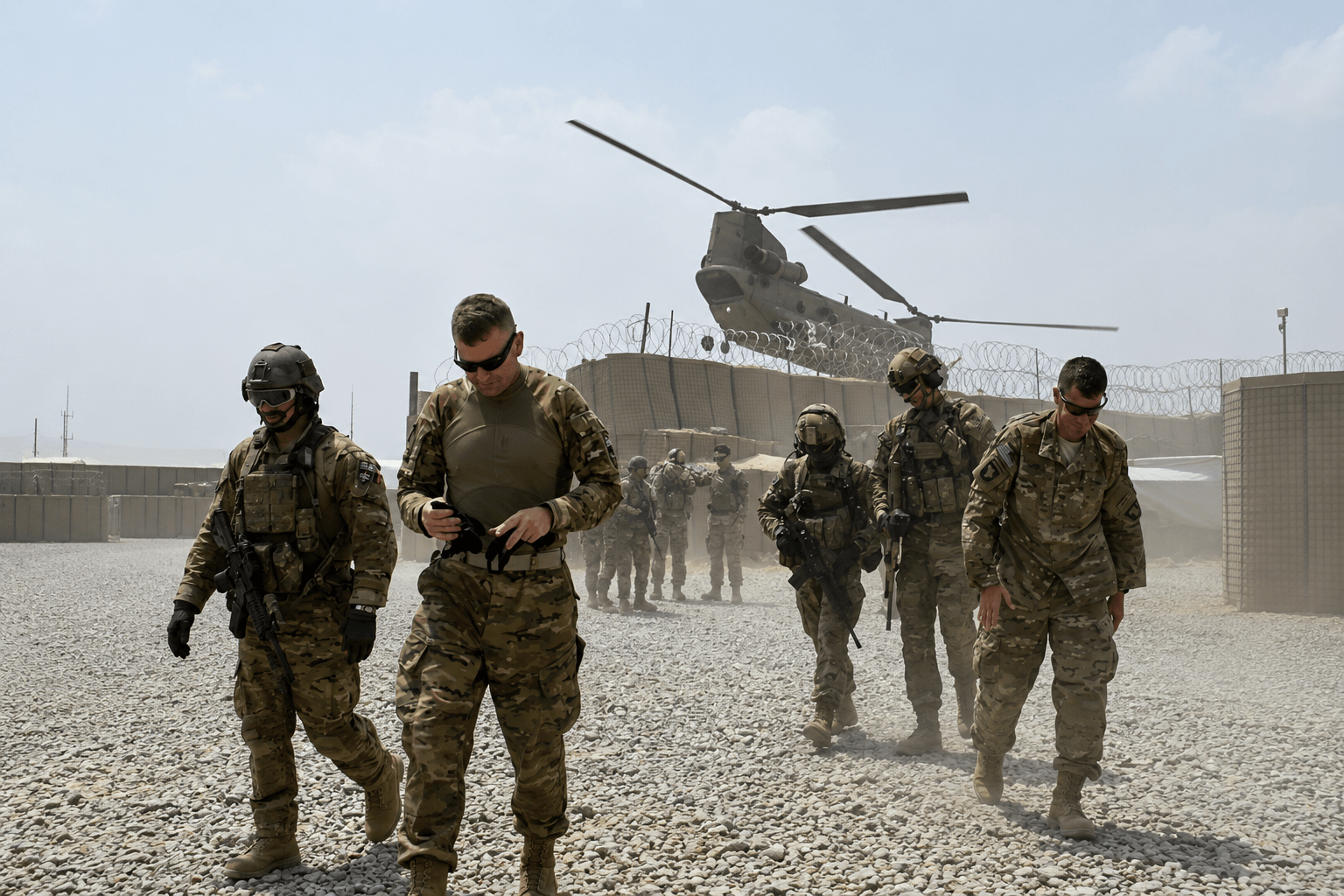
A recent study by the Dutch Institute for War, Holocaust and Genocide Studies shows that the effects of pollution caused by NATO military bases in Afghanistan may continue for years and could threaten the health of the country’s people.
The study states that military waste burn pits, leftover ammunition, and chemical warfare materials used in Afghanistan are among the main causes of widespread environmental contamination.
According to the report, a number of American soldiers developed serious illnesses, including cancer, after returning from Afghanistan, and the U.S. military provided compensation and medical services for some of them.
However, the study emphasizes that Afghan military personnel and civilians who were exposed to the same polluted environments have largely been ignored and have not received similar support or attention.
The research was conducted by Annika Schmieding, a senior researcher at the Amsterdam Institute for War, Holocaust and Genocide Studies. In her report, she says that “environmental justice” in the Afghanistan war has been implemented unequally, with Afghan victims receiving far less attention.
In the study, Schmieding refers to a concept called “technological seduction.” According to her, an excessive focus on scientific data and measurable information has caused the suffering of people without access to such resources to remain largely invisible.
By comparing extensive research on the health of American soldiers with the absence of similar studies on Afghans, the researcher argues that dominant narratives and political and environmental perspectives have led to the harms suffered by Afghan citizens receiving less attention.
One section of the report notes that official Western narratives about the Afghanistan war widely published statistics on NATO casualties, including the deaths of 2,448 American soldiers, 457 British soldiers, 66 German soldiers, and 25 Dutch troops.
In contrast, very limited information has been published about the more than 69,000 Afghan military personnel and police officers who lost their lives, as well as the millions of civilians exposed to war-related pollution.
The study stresses that focusing solely on the numbers of deaths and injuries hides a major part of the consequences of war, because the effects of war are not limited to death and physical injury; environmental damage and pollution caused by military presence also leave long-term impacts.
The report further states that in recent years, extensive research has been carried out on the effects of toxic substances at military bases, leading some American soldiers to gain access to healthcare services and medical benefits.
Nevertheless, Afghan forces and civilians living around these bases have largely been ignored in discussions related to “toxic violence.”
The researcher says that advanced health data systems available for American military personnel made accurate scientific research possible, but in Afghanistan, due to the destruction of the healthcare system and lack of resources, similar studies have not been conducted, leaving many victims outside the scope of recognition and support.
Writer:Salima Aryaei