
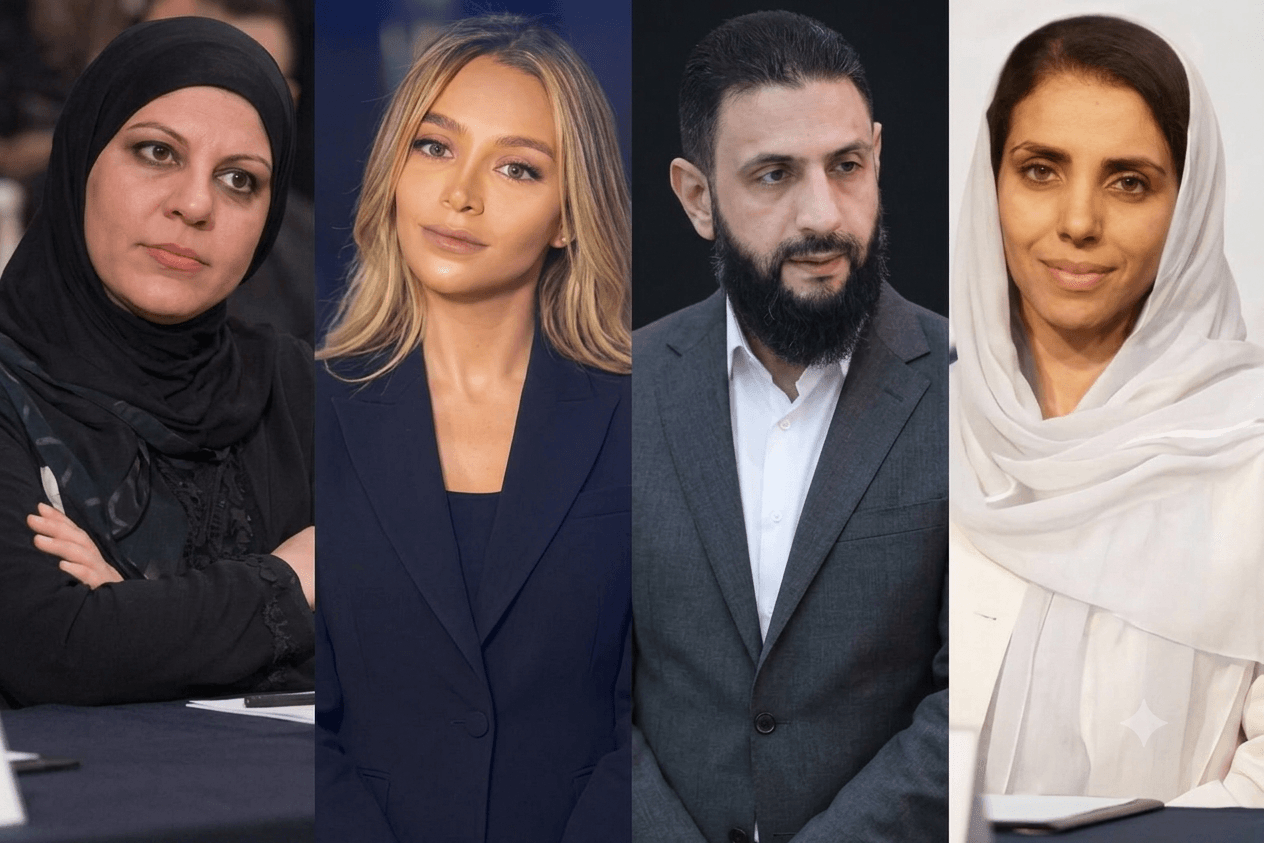
Syrian President Ahmed al-Sharaa has appointed 15 women among the 70 members selected for the country’s transitional parliament. With these appointments, the number of women in Syria’s 210-member parliament has increased from six to 21.
The list of appointees includes women from a wide range of professional backgrounds, including politics, journalism, higher education, research, the arts, law, architecture, and civil society.
Among the women appointed by al-Sharaa are Asma Farhan al-Sibai, Isra Zuhair Mustafa al-Mashhour, Hanan Ibrahim al-Balkhi, Daawa Abdulhamid al-Ahdab, Rozina Amer al-Ladhiqani, Sumaya Murad, Samira Ayman al-Wattar, Aisha Mohammed Fahd al-Debs, Lara Fathi Qadid, and Madonna Suhail Bishara.
Hanan Ibrahim al-Balkhi, a Syrian journalist and politician, previously served as a member of the Syrian National Council and worked as a correspondent for Al Araby TV. Isra Zuhair Mustafa al-Mashhour, the only female representative from Deir ez-Zor province, is a university professor and soil science researcher who earned her doctorate from Saint Petersburg University in Russia.
The appointment of renowned Syrian actress Rozina Amer al-Ladhiqani has also drawn public and media attention across the country.
Despite the increase in female representation, the composition of the transitional parliament has continued to face criticism from some Syrian political groups and civil society organizations. Critics argue that women and minority groups remain underrepresented in the country’s new power structure.
Some observers view the appointments as an effort by Ahmed al-Sharaa, who previously led a hardline Islamist group, to strengthen the image of Syria’s new government both domestically and internationally.
The development comes as, under Taliban rule in Afghanistan, girls above the sixth grade remain barred from attending school, while women are excluded from the cabinet, government positions, and key decision-making institutions.
Writer:Salima Aryaei